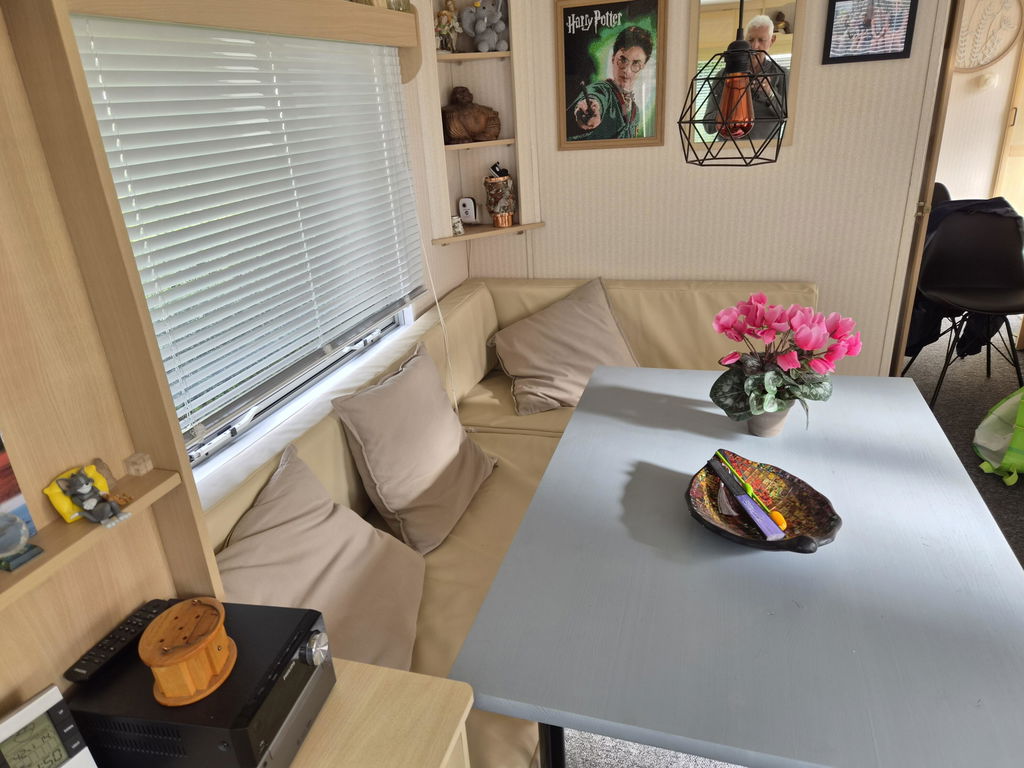

A motorhome seat has more to put up with than a sofa at home. People eat on it, shower nearby, drive with it, lean on it and sometimes sit on it in wet clothes. The right upholstery fabric for motorhome upholstery therefore has to do more than look good: it must also be comfortable, last a long time and be practical to maintain. If you choose on colour alone, you often only discover after a few trips why properties such as abrasion resistance, stretch and cleanability are so important.
Whether it is a small seating area, a complete motorhome interior or series upholstery work, the same principle applies: match the fabric to the use, the base and the way it will be worked. That way your motorhome gets an interior that suits your style and life on the road.
What should upholstery fabric for a motorhome be able to do?
Motorhome upholstery has a dual role. While driving, the fabric must stay neatly in place and withstand movement. At the campsite, the same upholstery must feel comfortable as a seat, a dinette and often also as a bed. That calls for an upholstery fabric with enough firmness, without becoming stiff.
Abrasion resistance comes first. Look at the Martindale score, a test that shows how well a fabric withstands rubbing. For normal private use, a sound score is often sufficient, but for intensively used motorhomes, rental motorhomes or contract projects, higher abrasion resistance is advisable. The score does not tell you everything, but it is a useful starting point alongside the quality of the weave and the finish.
Lightfastness also deserves attention. In a motorhome, sunlight comes in from all sides and can fade colours over time. Dark blues, anthracite and bold colours in particular call for a fabric that copes well with UV light. If the motorhome is often parked outside or you regularly travel to sunny destinations, this is not a detail but an important choice.
Stretch is another point that is often underestimated. A very stretchy fabric can fit beautifully on a wide seat or rounded cushions, but without good workmanship it can later crease or loosen. A stable woven upholstery fabric usually gives a smooth result on straight seat and back cushions. For complex shapes, an experienced upholsterer may deliberately choose a material with a little more give.
Which material suits the way you use your motorhome?
There is no single best fabric for every motorhome. The right choice depends on how you travel, who uses the motorhome and how much maintenance you are willing to do. A family with children and a dog simply has different requirements from two travellers who mainly take short weekend trips.
Woven upholstery fabric: versatile and comfortable
Woven fabrics are often a strong choice for motorhome interiors. They feel warm and homely, are available in many textures and colours and suit both modern and classic motorhomes. A finely woven fabric looks calm and sleek, while a coarse weave adds more character and can visually camouflage small signs of use better.
With a coarse structure, though, watch out for loose threads and a tendency to snag. If a pet travels with you or the seat cushions are used intensively, preferably choose a compactly woven, pet-friendly quality. It is less sensitive to claws and generally stays looking good for longer.
Chenille, velvet and corduroy: soft, but choose consciously
Chenille feels comfortable and luxurious and is popular for seating where you want to relax for a long time. The soft yarns add depth to the colour, but an open or very fluffy quality can hold more dirt. So choose an upholstery quality suitable for intensive use and follow the care advice carefully.
Velvet instantly gives a motorhome a rich look. The material is soft and can make a simple seating area remarkably chic. Bear in mind the pile marking: by brushing the pile in different directions, the colour can look different. That is a normal characteristic of velvet, not a manufacturing fault. For cushions that look sleek, careful cutting in the same pile direction is essential.
Corduroy brings warmth and a relaxed retro look. Wide ribs stand out more visually and are less suitable if you are looking for a very calm overall effect. Narrow cord is more subtle, but still requires precise workmanship so that the lines continue neatly across adjacent cushions.
Faux leather and leatherette: strong under intensive use
Faux leather or leatherette is practical for motorhomes in which things get spilled, children travel along or the seating area needs to be cleaned quickly. Many stains can be removed with a slightly damp cloth and the material absorbs odours less readily than textile. For rental motorhomes, motorhomes with pets or compact kitchen dinettes, that is a big advantage.
On the other hand, faux leather can feel warmer or cooler depending on the temperature. Cheaper qualities can also be less comfortable to sit on or wear more quickly over time. So choose an upholstery quality with a sturdy backing and sufficient flexibility. On larger cushions, a good underlayer such as Dacron helps to achieve a more even and comfortable result.
Colour and pattern: nice on a sample, good in practice
A light fabric makes a compact motorhome feel more spacious. Beige, sand, light grey or soft green give an open look, especially combined with light walls and wood décor. The drawback is clear: stains and dark clothing are more quickly visible. That need not be a reason to avoid light colours, but in that case preferably choose a mottled or lightly textured quality rather than plain white or cream.
Dark fabrics are more forgiving, but can make a small space feel heavier. Anthracite, olive green, denim blue and warm browns work well if the rest of the interior has enough light. A mottled fabric is often the most practical middle way. Small crumbs, dust and light signs of use are less noticeable than on a completely plain fabric.
If in doubt, order fabric samples first. The colour on a screen is never entirely reliable, and in a motorhome the look changes throughout the day due to sunlight, LED lighting and the colours of the wood, floor and cupboard fronts. Place a sample on the existing cushions and look at it both during the day and in the evening. Also feel whether the texture matches what you find comfortable on a long drive or a rainy evening inside.
Calculate enough fabric and take the direction into account
For motorhome upholstery, measuring only the length and width of a cushion is not enough. Measure each seat and back cushion separately, including thickness, sides and any rounded corners. Include seam allowance and an extra margin for errors. With a deep seat, loose armrests or many shaped parts, the number of metres required quickly adds up.
The fabric width is just as important. Upholstery fabrics are often supplied in a fixed width, but this can vary per item. A wide cushion panel sometimes fits in one width, while with a narrower fabric you have to plan extra seams. Also check whether the fabric has a pile direction, rib direction, design or clear nap. All parts must then be cut in the same direction, which requires extra material.
With a large design, always allow a more generous margin. A pattern that starts in the middle of one cushion and stops abruptly on the next looks restless. With checks, stripes or cord, lining things up is precise work. If you are unsure about the calculation, first draw a simple cutting plan on paper. That prevents you from ordering just too little.
A good fabric needs the right construction
New motorhome upholstery only becomes truly comfortable when the filling and finish are right. Worn foam loses support and makes even the most beautiful fabric less attractive. So check whether the cushions still have enough resilience. If the foam has sagged, replace it or top it up with suitable foam and Dacron.
Dacron gives a softer, fuller look and helps make sharp foam edges less visible. For removable covers, sturdy zips, suitable thread and correctly positioned piping are important. Piping accentuates the shape of a cushion, but does require precise workmanship. With frequent use, thread that is too thin or weak seams can become the first weak point.
If you are doing the upholstery yourself, it is a good idea to make one simple cushion first. This shows you how the fabric reacts, how much tension is needed and whether the seam position works out well. For fixed seats or complicated shapes, help from a professional motorhome upholsterer can save time and material.
Care keeps motorhome upholstery fresh for longer
Vacuum textile motorhome upholstery regularly with a soft upholstery brush. Crumbs and sand act as an abrasive when they stay in the fibres for a long time. Treat a stain immediately: dab calmly, do not rub hard and test a cleaning product first on an inconspicuous piece of fabric.
With faux leather, do not use aggressive cleaning products, solvents or hard scouring pads. These can damage the protective layer. A soft cloth and mild soapy water are usually sufficient. Air the motorhome well after a damp trip. This limits condensation, musty smells and unnecessary strain on both the fabric and the filling.
A motorhome interior does not have to be sterile to stay well cared for. Choose a quality that suits how you really travel, use samples to compare with confidence and also invest in a sound construction. Then every stop along the way will be just as comfortable as the destination.